

 02 9589 2342
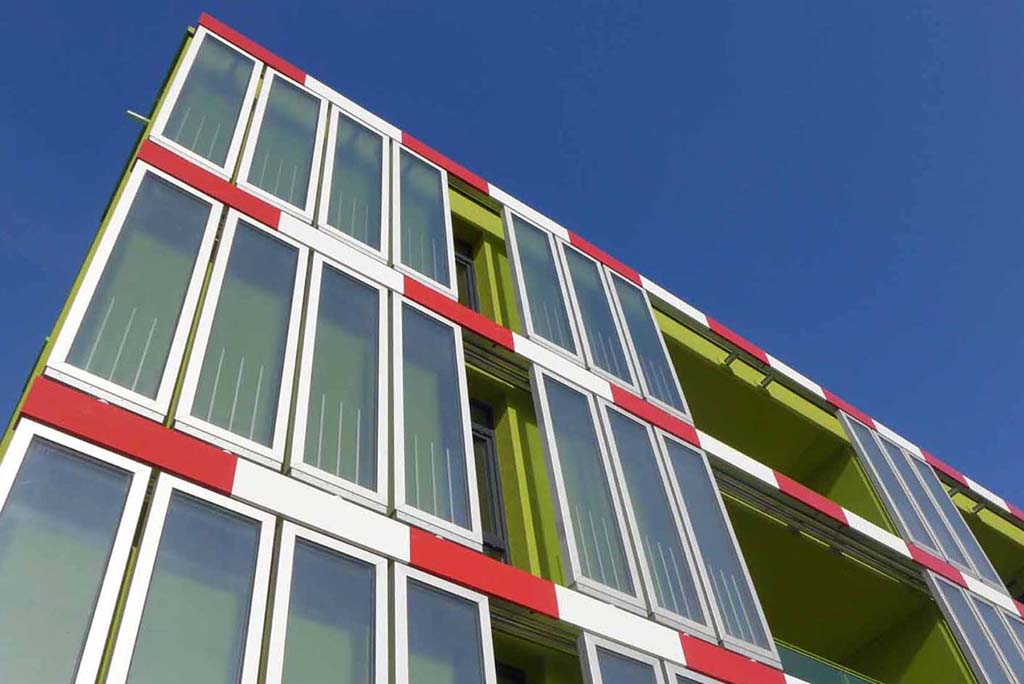
This month Material Matters looks at an alternative energy source – Algae.
We are all familiar with the alternative energy sources – the sun and wind. Did you also know that energy can be generated by utilising the chemical energy stored in Algae cells?
Since 2010 an increasing amount of research has been undertaken into how to capture the electric current generated from photosynthesis, a plants method of converting sunlight to chemical energy.
Algae Powered Buildings
In 2013 the worlds’ first algae powered building, known as The BIQ house, was unveiled in Hamburg Germany. It was designed by engineering firm Arup, as a prototype for sustainable energy producing buildings.
The BIQ house, features 200 square metres of integrated photo-bioreactors which create a “bioreactor façade” that is mounted as a “second skin” onto the sun-facing sides of the building.
Beneath the façade microalgae is cultivated in flat panel glass bioreactors. In total, 129 bioreactors are installed on the south-west and south-east faces of the four-storey residential building.
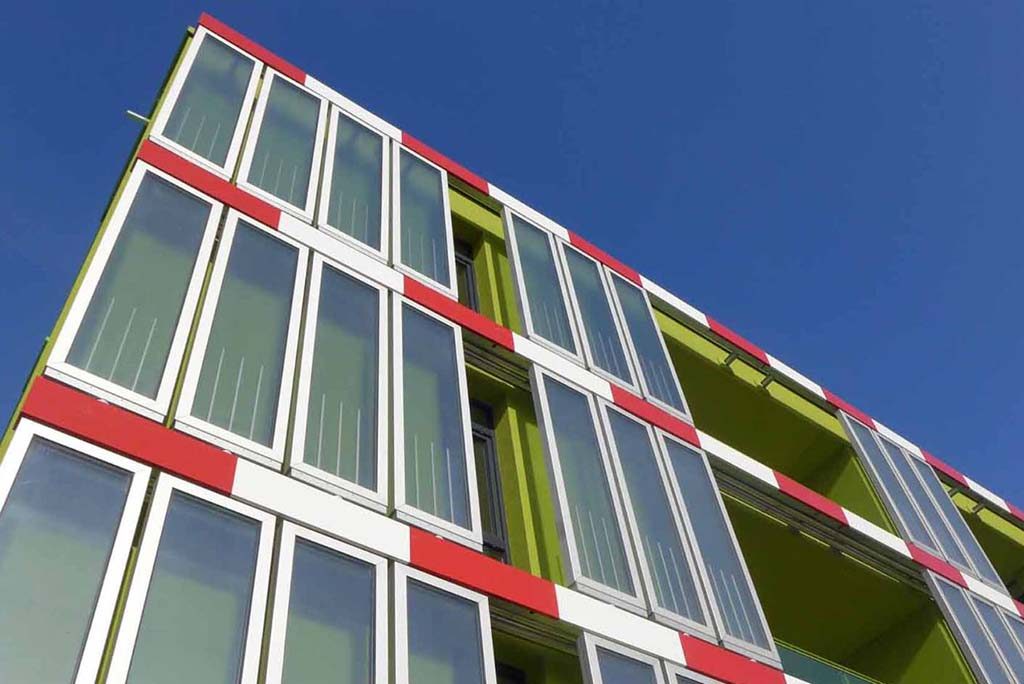
The photo-bioreactor system generates biomass and heat as a renewable energy resources, as well as providing shade, thermal insulation and noise abatement.
The entire unique system is controlled by a fully automated energy management centre, where solar thermal heat and algae are harvested in a closed loop to be stored and used to generate hot water.
What is a Photobioreactor?
A photobioreactor (PBR) is a bioreactor which incorporates a light source (that may be natural sunlight or artificial illumination) and a translucent container to grow small phototrophic organisms such as cyanobacteria, algae, or moss plants.
These organisms use light through photosynthesis as their energy source. This energy can then be harvested.
Green credentials:
• Algae is a renewable resource
• The water utilised in the Photobioreactor, does not have to be potable (drinking water)
• Algae can be collected to create bio-fuels (i.e. renewable diesel fuel, butanol), or can be utilised as biomass that can be combusted to create energy.
• Algae can be utilised to absorb carbon dioxide emissions from fossil fuel power plants
CLICK HERE to visit the Arup website and learn more about The BIQ house.
• Article: Vanessa Couzens
• Image 1: A close up view of the SolarLeaf façade designed by Arup for The BIQ house, Hamburg (Image source: Arup)
• Image 2: View of the façade of The BIQ house (Image source: Arup)