

 02 9589 2342
When your hands have known timber and tools since you were 15, change doesn’t come lightly. For Hamish Docking, construction was more than a career—it was a legacy. As a third-generation carpenter and builder in Albany, WA, Hamish spent over a decade running his own building company, mastering the practical intricacies of high-end renovations and bespoke residential projects.
But even while business thrived, something shifted.
“I started noticing that I was getting more excited about the design aspect than the build itself,” Hamish recalls. “Helping clients make selections, sketching out ideas—I realised I was passionate about the design process.”
In a region where quality residential design was lacking, Hamish felt a growing urge not just to build better—but to design better. That desire led him to Built Form Design Academy’s Certificate IV in Residential Drafting. It wasn’t just a career decision; it was a creative pivot.
Why Design, and Why Now?
The transition from builder to designer wasn’t about leaving the industry—it was about expanding his impact within it. Hamish had seen first-hand how good design could transform client experiences and project outcomes. He had also seen how often design fell short.
“In Albany, there’s a real shortage of good design. We’d work on builds where I’d think, ‘I could’ve designed this better,’” he says. “That frustration built up over time.”
The goal? To evolve his practice into a fully integrated design-build service—one that combines his hands-on expertise with strong, client-focused design. But to do that, he needed formal drafting skills and software confidence.
Studying Around the Clock
With a thriving building company and ongoing renovation projects, Hamish knew traditional study wouldn’t fit. BFDA’s self-paced, online model was the perfect solution.
“I’m a morning person. I’d get up at 3 a.m., study for three hours, then do my workout and head to work,” he says. “That early start was the only way I could make it happen.”
It wasn’t always smooth sailing. Hamish admits he lost momentum at times—particularly when the building industry entered a period of intense volatility. Juggling projects, staff, and spiralling material costs tested his resolve. But what kept him going was a clear vision of what he wanted his future to look like.
“There were times I let the routine slip, but I always came back to it. I knew what I was working toward.”
Designing in Real Time
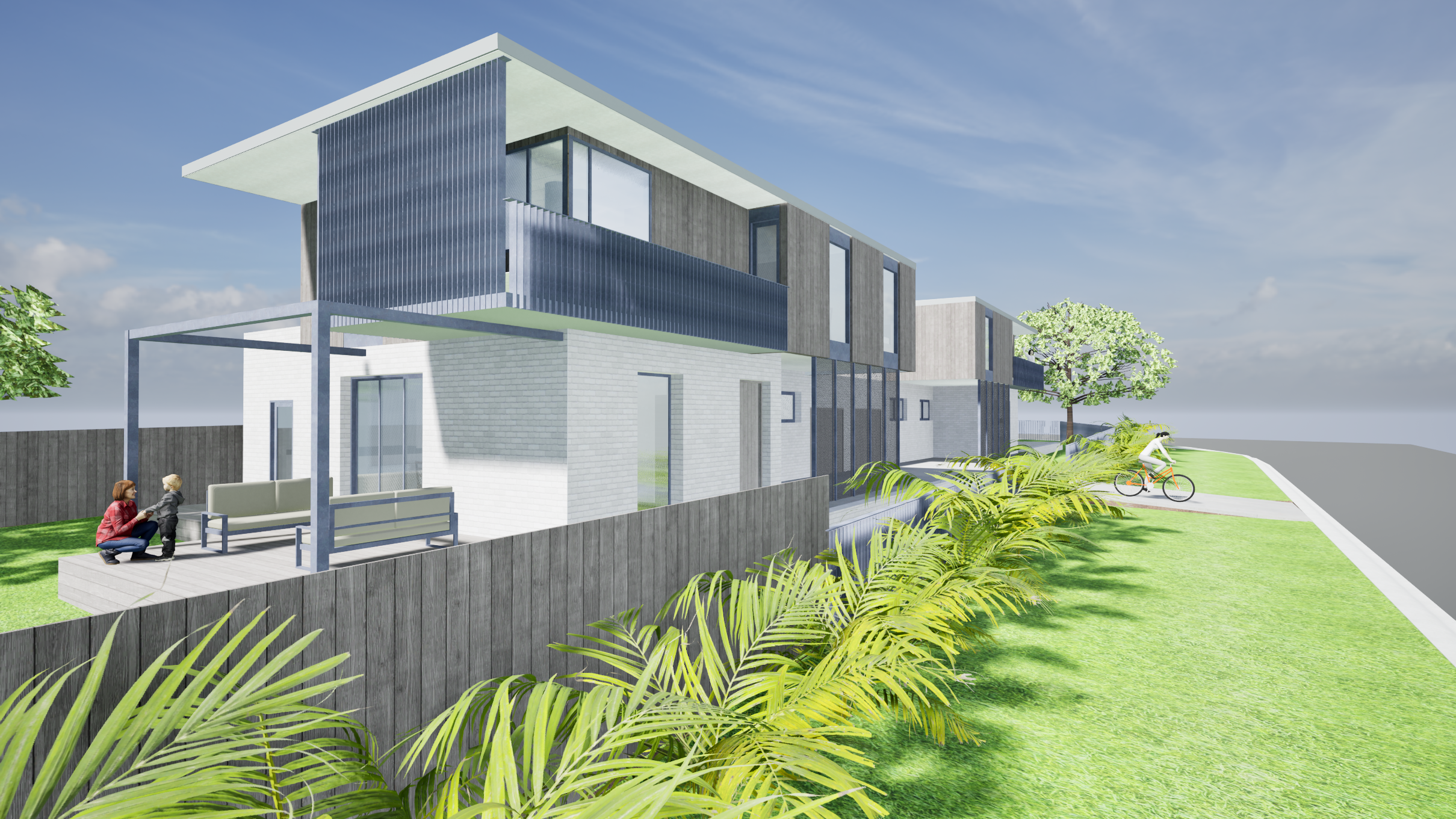
One of the most powerful parts of Hamish’s learning experience was how immediately applicable it became. As his drafting skills developed, he began using them on live client projects—producing 3D renders to help explain renovation concepts.
“People don’t always understand what you’re trying to describe. But when you show them a 3D visual, everything clicks,” he says. “It completely changed how I communicate with clients.”
Learning ArchiCAD wasn’t easy at first. The software, he says, felt intimidating—far from intuitive. But somewhere between the late nights and early morning
s, a shift occurred.
“There was this moment halfway through the first major project where it all started to come together. I looked at the plans I’d drawn and thought, ‘I actually know what I’m doing now.’ That was huge.”
High Standards That Matter
What set BFDA apart for Hamish wasn’t just the content—it was the quality of support and the rigour of the marking.
“You couldn’t just scrape through. The educators picked up on every detail and made sure we fixed our mistakes,” he says. “At the time, it was frustrating, but now I appreciate it. That’s how you really learn to do it right.”
That thoroughness, he believes, is what makes BFDA graduates job-ready—and distinguishes the course from other training options.
“I know people who’ve done the local TAFE course, and honestly, the depth isn’t the same. This course actually prepares you to walk into a drafting office and get to work.”
A Clearer Design Future
Now that he’s completed the course, Hamish is beginning to shape the next phase of his career. He envisions a practice that fuses building and design—bringing thoughtful, practical solutions to the regional market.
 “It’s about giving people a better service,” he says. “Being able to design and build means you control the whole journey and deliver a better outcome.”
Would he study again with BFDA?
“Absolutely. I’d do the diploma with you guys in a heartbeat. This course helped me take the next step—and I’m just getting started.”
Ready to upskill with purpose? Discover the course that turns potential into practice.
Explore the Certificate IV at BFDA
Visit our Instagram to see other exceptional work! https://www.instagram.com/builtformdesignacademy/