
 02 9589 2342

Building a Clearer Pathway
Initially enrolling in the Cert IV in Residential Drafting, Jake was looking to formalise what he already knew. But it quickly became more than that. The course introduced a structured building design career pathway that extended beyond drafting into how projects are actually conceived, managed, and delivered.
For Jake, residential drafting wasn’t just about producing drawings. It was about understanding how decisions are made early, and how those decisions impact everything that follows.
“I think the biggest thing I learned was not overworking the early stages. Get the concept right first, then develop it.”
This shift in thinking marked the beginning of a deeper transformation.
Inside the Learning Experience
Through the residential building design course, Jake engaged with project-based assessments that mirrored real industry workflows. One project in particular pushed him outside his usual approach.
“At the start, it rattled me… figuring out how to tackle the concept,” he said.
Instead of jumping straight into detailed plans, he began using early-stage tools like bubble diagrams to explore spatial relationships and client needs before committing to design decisions. It was a method he had not previously used in practice.
Alongside design thinking, the course introduced areas Jake had little exposure to, including risk management, contract administration, and business systems. These were challenging, but deliberately so.
“That’s what I wanted from it, to be challenged and to learn.”
Teresa, Head of School, reinforces this approach. Industry capability is not just about producing drawings, but about understanding responsibility, risk, and process. These are the elements that define long-term success in building design.

From Reactive to Structured
The most significant change for Jake was not technical skill alone, but how he approached his work.
He began implementing structured workflows, introducing checklists, improving client communication, and refining how he managed projects from start to finish. Instead of reacting to problems late in documentation, he built systems to prevent them.
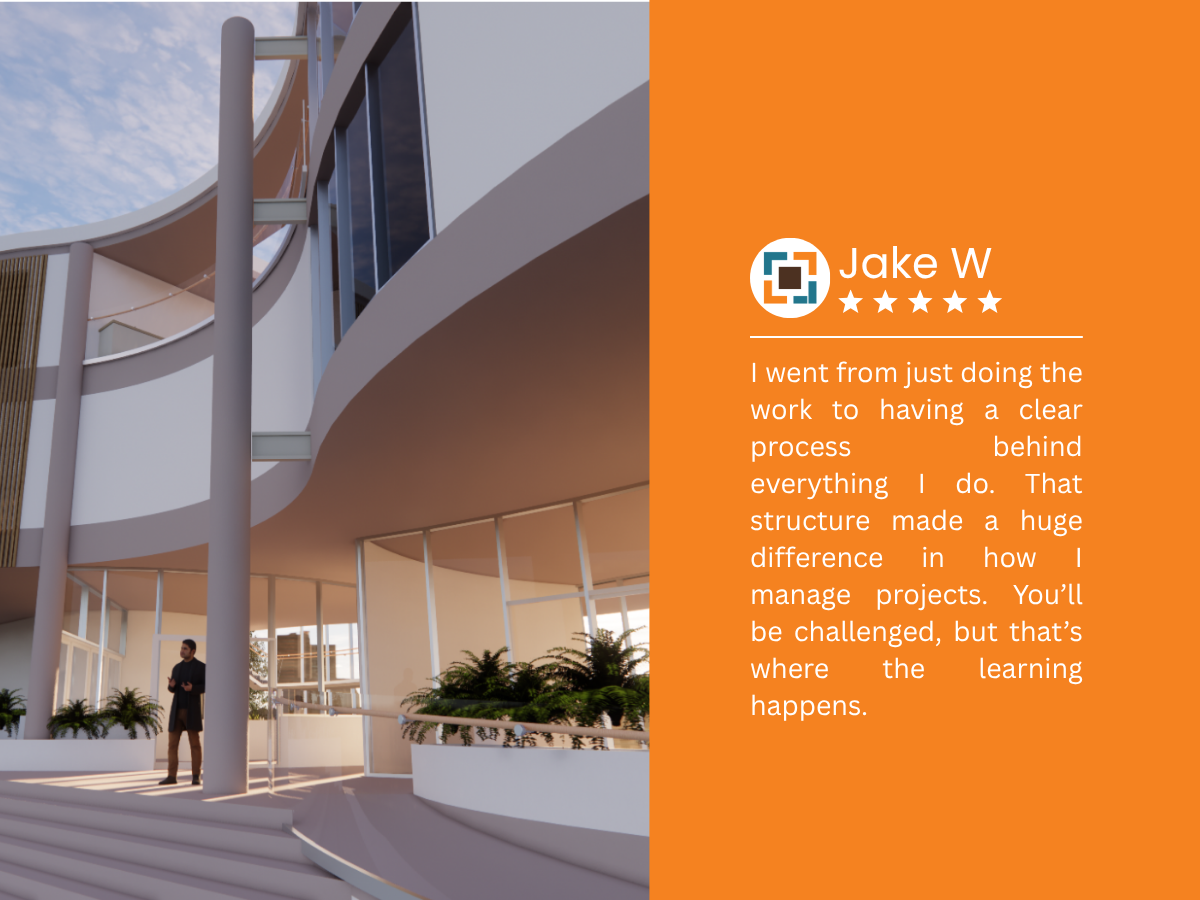
“Making sure what I do has a process to it… so I’m not missing parts,” he explained.
This level of due diligence is what separates entry-level drafting from professional practice.
Real Career Impact
Already working in industry, Jake’s transformation was not about getting a job. It was about expanding capability and opening future opportunities.
The Cert IV in Residential Drafting, followed by further studying the Diploma of Building desing, positioned him to think beyond his current role. Whether progressing toward accreditation, taking on more complex projects, or eventually running his own business, he now has a clearer direction.
“The diploma set me up to explore opportunities down the track… even starting my own business.”
Advice to Future Students
Jake’s advice is simple. Do not wait until you feel ready.
“You’ll be challenged, but that’s where the learning happens,” he said.
For those already in the industry, a drafting qualification online can bridge the gap between experience and expertise. For those starting out, it creates a structured entry into a complex field.
Where to Next
The building design industry is evolving. Technical skills alone are no longer enough. Designers need to think critically, manage risk, and understand the full lifecycle of a project.
BFDA’s Diploma of building Design is designed for exactly that.
If you’re ready to move from doing the work to understanding it, this is where it starts.