

 02 9589 2342

Shou Sugi Ban (also known as Yakisugi), which translates to ‘burnt cedar board’, is a centuries old Japanese technique of charring “Sugi” (cedar – Cryptomeria japonica) planks which can be used for residential siding (cladding), fencing, and decking.
Traditionally Japanese carpenters preferred the durability and unique finish of recovered driftwood that had been exposed the weathering of saltwater, surf and sun. However, with a growth in demand, driftwood fell into short supply and around the 1700s an alternative timber preservative needed to be substituted.
For the next two hundred years Shou Sugi Ban became a common material for cladding buildings, until the twentieth century, when a shortage of wood lead to increasing costs to import timber and the advent of modern plastic and cement based siding, decking and fencing became the cheaper alternative.
In the early 2000s, the ‘lost’ technique of Shou Sugi Ban enjoyed a revival and architects and designers around the world have adopted it as a ‘new’ material to utilise in the design buildings.
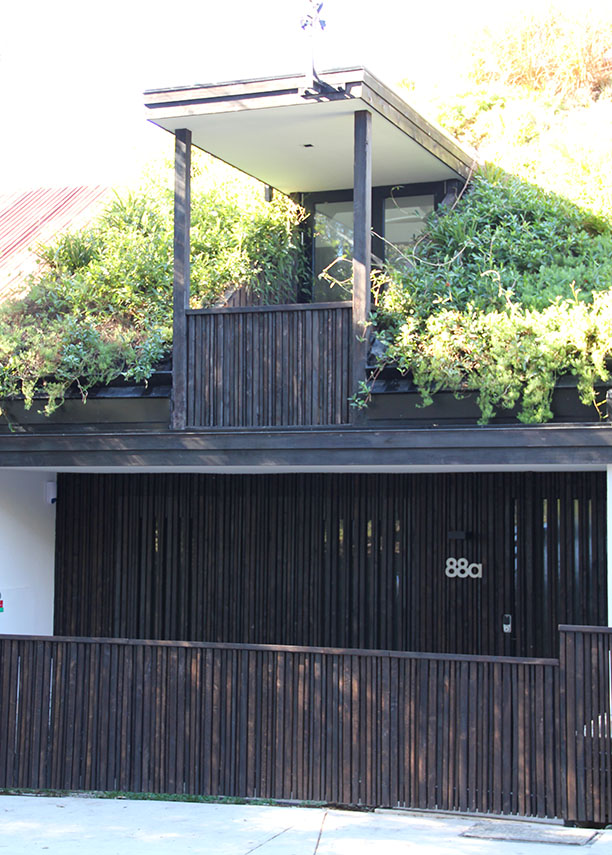
There are many advantages to Shou Sugi Ban. Wood is essentially comprised of two main components – cellulosic compounds and lignin. The cellulosic compounds are more volatile, which means that they are less chemically stable. The lignin is much more chemically stable. The charring process drives off the lighter-weight and more volatile cellulosic compounds leaving behind blackened lignin which is harder and more stable.
This blackened lignin is less palatable to wood pests and termites and gives it increased resistance to attack. It also acts as an insulator because the blackened lignin changes the thermodynamic conductivity of the wood, requiring a lot higher heat and longer contact with a flame source to ignite again.
Most timbers that are left uncoated and exposed to direct and indirect sunlight will inevitably weather and grey off. With Shou Sugi Ban the charred surface protects the surface from the effects of UV and the blackened finish can last for several decades without the need for maintenance. The charred surface can also be oil finished to further extend the materials appearance.
- Article: Vanessa Couzens
- Image 1: A view of the Shou Sugi Ban cladding at the rear of a townhouse in the sustainable development ‘Angel Street’ in Newtown NSW, designed by Steele Associates (Photo: V.Couzens)
- Image 2: A view of the Shou Sugi Ban garage doors and fencing on the street face of the ‘Angel Street’ townhouse development designed by Steele Associates (Photo: V.Couzens).